
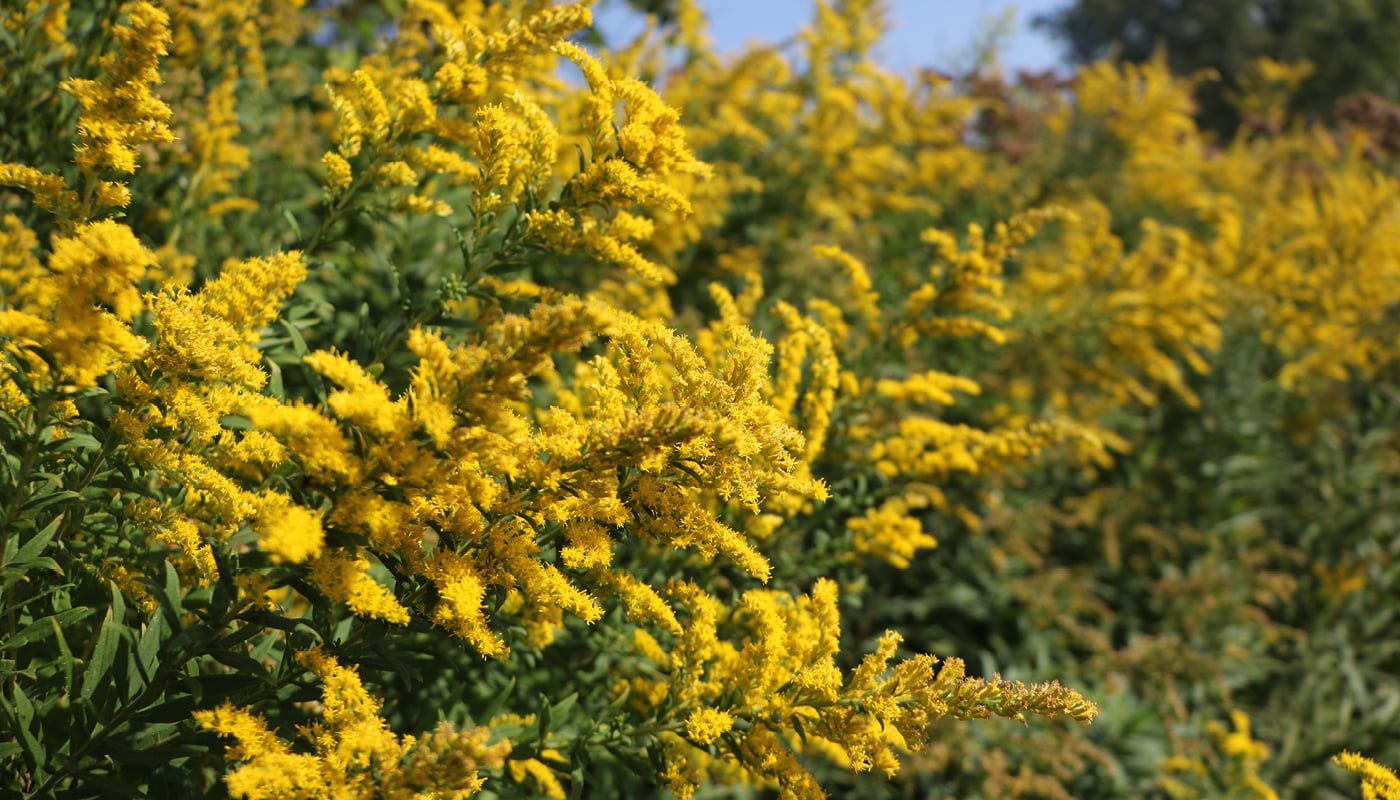
When autumn color arrives in Cook County, there is a tendency to look up. But beyond the changing canopy, another fall show is unfolding.
Across the Forest Preserves of Cook County, prairies remain remarkably active as summer gives way to fall. September and early autumn bring blooms from asters, goldenrods, blazing stars, gentians and false foxgloves, while some grasses flower and set seed and other plants begin the transformations that will carry them toward winter.
It is a seasonal display rooted in a much bigger story about Cook County.
Prairie habitat once covered roughly 60% of Illinois but an estimated 73% of Cook County—more than 441,000 acres. Today, the Forest Preserves protects and restores some of the only prairie and grassland left in the county, about 1,591 acres. These remnant prairies and prairies created through restoration include notable variations: black soil, sand, gravel hill, and dolomite. Some of the most stunning displays are Bartel Grassland, Carl R. Hansen Woods, Somme Prairie Nature Preserve, Sagawau Environmental Learning Center, and Wolf Road Prairie Nature Preserve.
Fall is an especially rewarding time to explore these landscapes because many prairie plants flower during the early part of the season. Visitors might encounter heath aster, New England aster and sky blue aster. Gray and showy goldenrods also flower during this period, while dense and rough blazing stars can be found in prairies ranging from wet to dry.
Look closely and the prairie becomes even more interesting.
Blue flowers are relatively uncommon among the region’s flora, but fall can bring bottle gentians, prairie gentians and fringed gentians into bloom. False foxgloves balance delicate, wispy stems with vivid magenta-pink flowers. And prairie dropseed offers something beyond color: its flowers, which can bloom through early September, carry a scent reminiscent of popcorn.
The experience continues to change as autumn advances. After many blooms fade, compass plant turns golden and flowering spurge can develop neon-orange leaves. Native roses like pasture rose produce rosehips, which remain visible well into colder weather.
Enjoy the view overhead this fall; just remember to look across the prairie, too.