
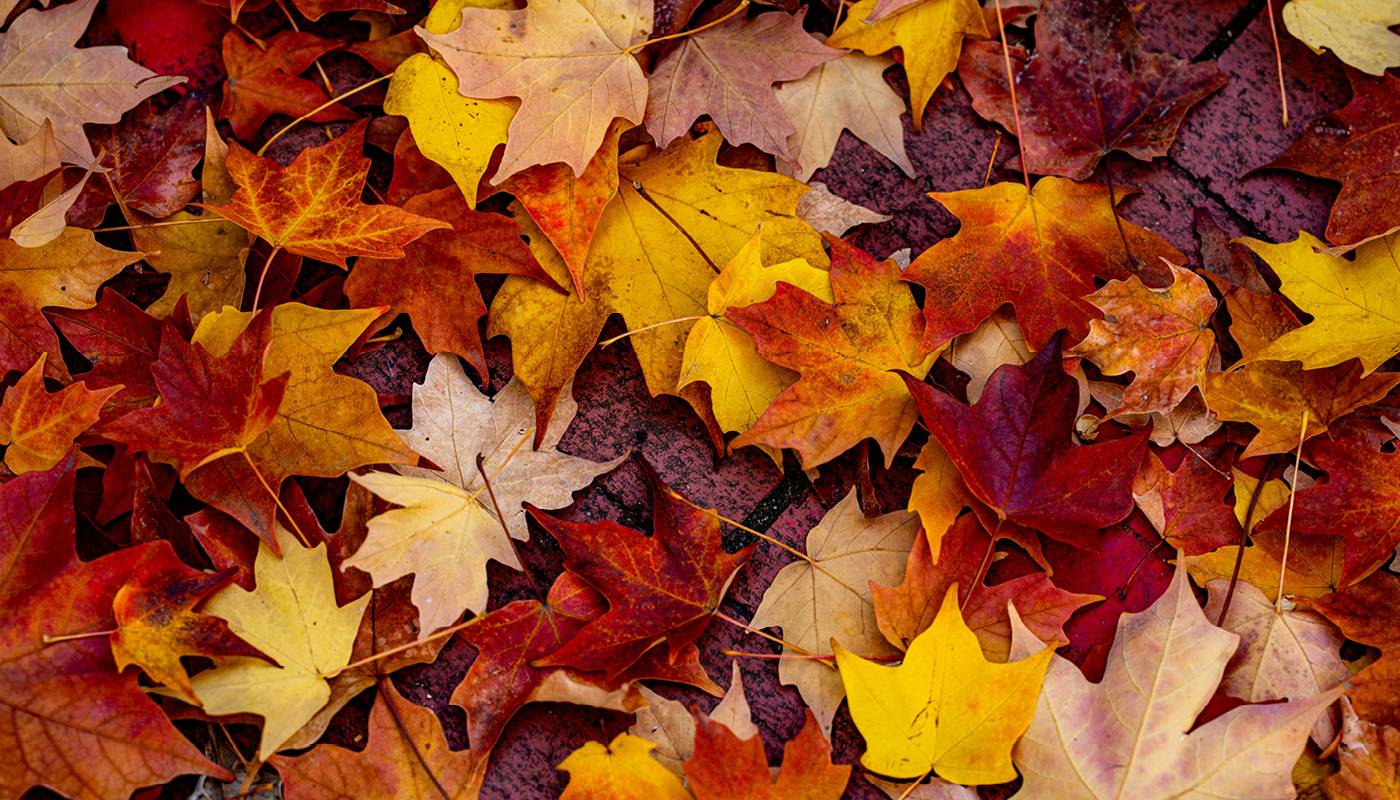
Crunching under your feet like nature’s confetti, fall leaves turn the Forest Preserves’ floor into a mosaic of reds, golds and browns. But beyond their beauty, each leaf’s shape and size holds clues that help reveal the identity of its tree. Take a closer look, and you’ll uncover a hidden world of forest storytelling written in leaf form.
Burr oak (Quercus macrocarpa)
Fall color: Brown
See Them Here: Carl R. Hansen Woods, Crabtree Nature Center
Bur oak is unique for its bark’s “corky” appearance and its leaves shaped like a witch in a skirt and pointy hat. Its massive trunk has gray to brown furrowed bark and its branches bear lustrous dark green leaves that turn yellow-brown.
Sugar maple (Acer saccharum)
Fall color: Orange
See Them Here: River Trail Nature Center, Dam No. 1 Woods-East, Dam No. 4 Woods-East
Sugar maple is the primary species used to make maple syrup. The tree is well known for the beautiful fall foliage it produces. In fall, the leaves have a wide range of vibrant colors from yellow to orange to red.
Shagbark hickory (Carya ovata)
Fall color: Yellow
See Them Here: Wolf Road Woods, Little Red Schoolhouse Nature Center, Swallow Cliff Woods
The shagbark hickory gets its name from the shaggy looking bark that peels off of mature trees. Lots of mammals and a variety of bird species feed on nuts from these trees.
Black oak (Quercus velutina)
Fall color: Varies from yellow to brick red
See Them Here: Powderhorn Lake, Wampum Lake
Unique among oak species, black oak prefers well-drained, sandy soil. Compared to red oak and white oak, these trees are relatively short-lived—typically surviving less than 200 years.